Lake County Dog Registration Information
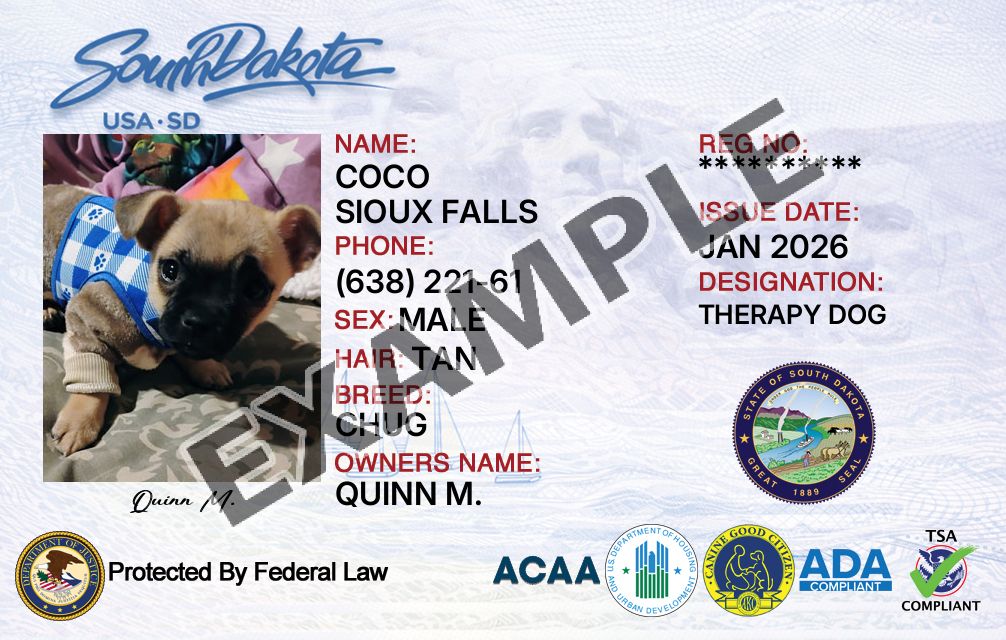
Service Dogs and Emotional Support Animals in Lake, South Dakota
If you’re asking where do I register my dog in Lake County, South Dakota for my service dog or emotional support dog, the key point is that dog licensing is usually handled locally (most often by a city office if you live inside city limits, or by a county office/law enforcement contact if you live in the rural/unincorporated parts of the county). “Registration” may mean different things depending on what you need: a dog license in Lake County, South Dakota (when required by a local ordinance), proof of rabies vaccination, or documentation related to service dog or emotional support animal status.
This page explains where to register a dog in Lake County, South Dakota, how local licensing and rabies enforcement typically works, and how service dogs and emotional support animals fit into the picture.
Where to Register or License Your Dog in Lake County, South Dakota
Because licensing and animal control responsibilities can differ by location, start by confirming whether you live inside a city/town (like Madison or Wentworth) or outside city limits in unincorporated Lake County. The offices below are official government contacts that can help direct you to the correct local process for an animal control dog license Lake County, South Dakota question, rabies enforcement, impoundment rules, or which ordinance applies to your address.
Example Official Offices (Lake County-area)
| Office | Address | Phone | Hours | |
|---|---|---|---|---|
|
City of Madison — Finance Office
City office contact (Madison)
|
503 S Highland Avenue Madison, SD 57042 |
(605) 256-7500 | Not listed on the office directory page | Mon–Fri, 7:30 AM–4:00 PM |
|
Lake County Auditor’s Office
County courthouse office (general county admin contact)
|
200 E Center Street Madison, SD 57042 |
(605) 256-7622 | lakaud@lake.sd.gov | Mon–Fri, 8:00 AM–5:00 PM (CT) |
|
Lake County Treasurer
County courthouse office (county contact point)
|
200 E Center Street Madison, SD 57042 |
(605) 256-7618 | Not listed in the directory used for phone/address | Not listed in the directory used for phone/address |
|
Lake County Sheriff
Law enforcement contact (animal complaints/strays may route here)
|
219 N.E. 1st Street Madison, SD 57042 |
(605) 256-7611 | Not listed on the directory used for phone/address | Mon–Fri, 8:00 AM–5:00 PM (office); 24/7 emergency response |
|
Town of Wentworth (City/Town Office)
Local office contact (Wentworth)
|
216 S Main Ave Wentworth, SD 57075 |
(605) 483-3155 | wentworth@itctel.com | Mon & Wed, 12:00 PM–3:00 PM (unless otherwise posted) |
Tip: When you call, ask: “Do you require a dog license at my address? If yes, which office issues it and what proof of rabies vaccination is required?”
Overview of Dog Licensing in Lake County, South Dakota
Local ordinances control most licensing
In many parts of South Dakota, dog licensing is not handled as a single statewide system. Instead, rules are often created and enforced through local ordinances—meaning the requirements can change depending on whether you live inside city limits (for example, within the City of Madison or the Town of Wentworth) or in the unincorporated areas of Lake County. That’s why “dog license in Lake County, South Dakota” is often a local question, not a one-size-fits-all answer.
Some cities may not require a dog license
Even within Lake County, requirements can differ by municipality. For example, the City of Madison’s published FAQ indicates the city repealed its dog license requirement by ordinance, while still maintaining other animal rules and inoculation requirements. If you live in Madison, you may not need a city-issued license tag, but you still need to follow applicable animal-control rules (including vaccination expectations).
Rabies control is a consistent enforcement priority
Whether or not a city issues license tags, rabies vaccination requirements are commonly tied to local animal control enforcement, bite procedures, impoundment, and public health response. The South Dakota Department of Health provides statewide rabies information and references state statutes related to rabies control, which supports why local governments frequently ask for proof of vaccination.
How Dog Licensing Works Locally in Lake County, South Dakota
Step 1: Identify which jurisdiction you live in
Start by determining whether your home is:
- Inside city/town limits (local city/town ordinances apply first), or
- Outside city/town limits in unincorporated Lake County (county-level contacts or law enforcement may be your starting point).
This is the most important step when you’re searching for where to register a dog in Lake County, South Dakota, because the correct office may change by address.
Step 2: Ask whether a license is required and what “registration” means
When residents say “register my dog,” they might mean:
- A dog license tag issued by a city/town clerk or finance office (if the municipality requires it)
- A record of rabies vaccination kept on file (sometimes tied to a clinic, local ordinance, or impoundment procedures)
- Guidance on animal control enforcement and what happens if a dog is at-large, bites, or is impounded
Step 3: Keep vaccination documentation current
Even where a local dog license is not required, proof of rabies vaccination may be needed for:
- Redeeming a dog from impoundment
- Responding to bite investigations or quarantine requirements
- Housing documentation or landlord requests (separate from service/ESA rules)
Step 4: If you have a service dog or ESA, understand what does (and doesn’t) change
Having a service dog or emotional support animal does not automatically replace local public health and animal control requirements. Your dog may still need to be vaccinated and comply with leash/at-large rules. What changes is primarily the legal access or accommodation rules (service dogs in public places; ESAs mainly in housing), not whether a city issues a license tag.
Service Dog Laws in Lake County, South Dakota
Service dog status is not the same as a dog license
A dog license (when required locally) is an animal-control / public-health tool. A service dog is defined by its training and purpose: a dog that is individually trained to do work or perform tasks for a person with a disability. There is no requirement that a service dog be “registered” with a private company or carry a special license to be legitimate.
Public access and local animal rules can overlap
Even though service dogs have public access rights under federal law, local governments can still enforce neutral animal rules such as:
- Rabies vaccination requirements
- Leash/control expectations (unless a leash interferes with the dog’s work, in which case control must be maintained by voice/signal/other effective means)
- Dangerous dog or bite-related procedures
Avoid “service dog registration” scams
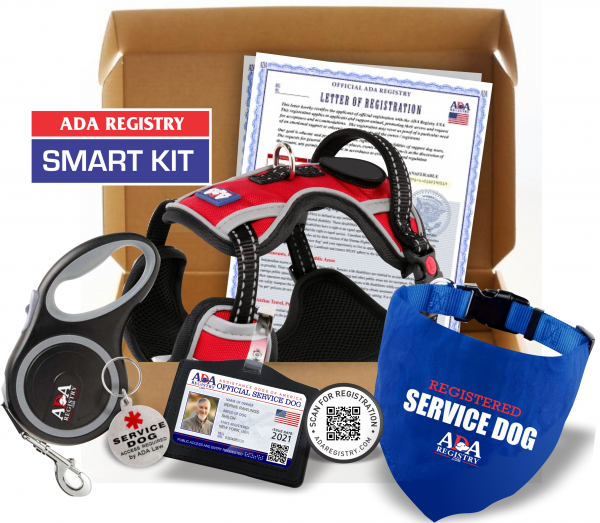
If you are being told you must pay for an online “registration,” “certification,” or ID card to make your dog a service dog, that is generally not how service dog status works under U.S. law. If you need help understanding what documentation is appropriate for your situation, start with official local offices for animal control questions and consult qualified professionals for disability-related needs.
Emotional Support Animal Rules in Lake County, South Dakota
An emotional support dog is not a service dog
An emotional support animal (ESA) provides comfort by its presence, but it is not trained to perform specific tasks like a service dog. This difference matters because ESAs generally do not have the same public access rights as service dogs in places like restaurants, stores, or other public accommodations.
Where ESAs most often matter: housing
ESA rules are most commonly applied in housing contexts (such as rentals). A landlord may be required to consider a reasonable accommodation when appropriate, but this is separate from local animal control requirements. Even when an ESA accommodation applies, you may still need to follow:
- Local rabies vaccination expectations
- Leash/at-large rules and nuisance rules
- Any applicable impoundment or bite procedures
ESA “registration” is usually not required
Like service dogs, an ESA typically does not need to be registered through a third-party website to be recognized in housing contexts. For local “registration” questions, your most practical step is still to confirm whether your location requires a dog license in Lake County, South Dakota or simply proof of vaccination and compliance with local ordinances.
Frequently Asked Questions
Register A Dog In Other South Dakota Counties
Select your county below to get started with your dog’s ID card. Requirements and license designs may vary by county, so choose your location to see the correct options and complete your pup’s registration.
- Aurora County Dog Registration
- Beadle County Dog Registration
- Bennett County Dog Registration
- Bon Homme County Dog Registration
- Brookings County Dog Registration
- Brown County Dog Registration
- Brule County Dog Registration
- Buffalo County Dog Registration
- Butte County Dog Registration
- Campbell County Dog Registration
- Charles Mix County Dog Registration
- Clark County Dog Registration
- Clay County Dog Registration
- Codington County Dog Registration
- Corson County Dog Registration
- Custer County Dog Registration
- Davison County Dog Registration
- Day County Dog Registration
- Deuel County Dog Registration
- Dewey County Dog Registration
- Douglas County Dog Registration
- Edmunds County Dog Registration
- Fall River County Dog Registration
- Faulk County Dog Registration
- Grant County Dog Registration
- Gregory County Dog Registration
- Haakon County Dog Registration
- Hamlin County Dog Registration
- Hand County Dog Registration
- Hanson County Dog Registration
- Harding County Dog Registration
- Hughes County Dog Registration
- Hutchinson County Dog Registration
- Hyde County Dog Registration
- Jackson County Dog Registration
- Jerauld County Dog Registration
- Jones County Dog Registration
- Kingsbury County Dog Registration
- Lawrence County Dog Registration
- Lincoln County Dog Registration
- Lyman County Dog Registration
- Marshall County Dog Registration
- McCook County Dog Registration
- McPherson County Dog Registration
- Meade County Dog Registration
- Mellette County Dog Registration
- Miner County Dog Registration
- Minnehaha County Dog Registration
- Moody County Dog Registration
- Oglala Lakota County Dog Registration
- Pennington County Dog Registration
- Perkins County Dog Registration
- Potter County Dog Registration
- Roberts County Dog Registration
- Sanborn County Dog Registration
- Spink County Dog Registration
- Stanley County Dog Registration
- Sully County Dog Registration
- Todd County Dog Registration
- Tripp County Dog Registration
- Turner County Dog Registration
- Union County Dog Registration
- Walworth County Dog Registration
- Yankton County Dog Registration
- Ziebach County Dog Registration